
New CPSC requirement: Safety Standard for Toys - Requirements for Water Beads
Find this article helpful? Share it with others.
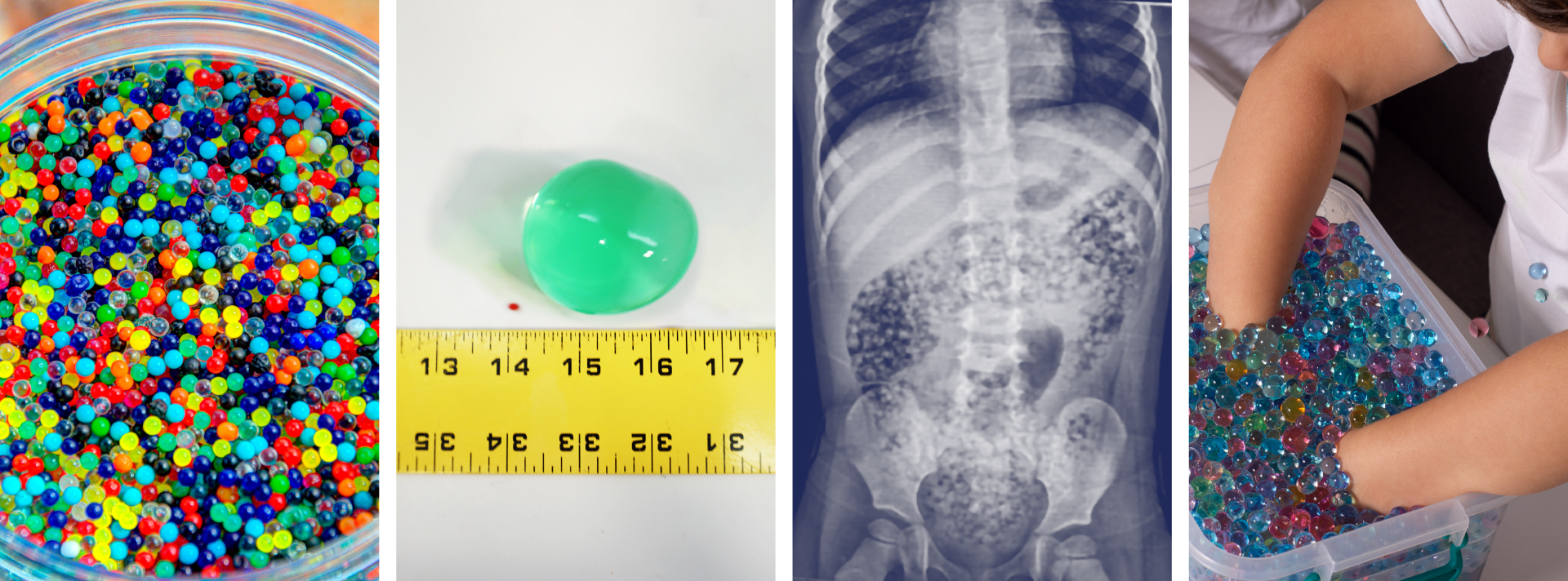
Definition
Water bead means a various shaped liquid absorbent polymer, composed of materials such as, but not limited to, polyacrylamide and polyacrylate, which expands when soaked in liquid.
Rationale for the Update
- Although ASTM F963‑23 already includes general requirements for expanding materials, it doesn’t fully address hazards unique to water beads—namely ingestion, choking, aspiration, and insertion into nose or ear.
- Incident data showed cases of serious injury and death from water bead incidents, even when products met ASTM F963‑23 standards.
- CPSC determined more protective requirements were needed to reduce risk and provide the highest feasible safety under CPSIA section 106.
Hazards Addressed
- Ingestion: Can expand in the gastrointestinal tract causing blockages or death
- Insertion into nose or ear: Children have required medical interventions after inserting beads.
- Aspiration and choking: Small, moist, and smooth beads pose aspiration/choking risks.
These risks were not fully mitigated by the general expanding material provisions in ASTM F963‑23.
Scope and Exemptions
In scope:
- l Water bead toys: water beads marketed or designed for children under 14.
- l Toys that contain water beads: e.g., stress balls or squeeze toys where beads are enclosed and not intended to be accessed.
Out of scope/exemptions:
- Water beads used for non‐toy purposes (e.g., decorative vase beads, plant hydration, air fresheners, or medical cold packs).
Requirements
In addition to the requirements of §1250.2 (i.e., ASTM F963-23), all water bead toys and toys containing water beads within the scope of the rule must meet the performance requirements in §1250.4 to minimize the risk of children ingesting, inserting, aspirating, and choking on water beads.
Conditioning
Before the size limit testing, the water bead or toy containing the water bead shall go through the procedures of pre-test conditioning, dehydration if needed, and submersion as described in Section (c)(1) of the Final Rule. Conditioning involves multiple measurements (6, 24, 48, and 72 hours) to identify the point of greatest expansion. If maximum expansion occurs before 72 hours, a new bead must be conditioned for that interval. This process may take 1–2 weeks to complete.
Size Limit Requirements
For water beads that, when dehydrated, fit entirely in the small parts cylinder, the conditioned bead must remain whole while completely passing through either a funnel test gauge or sieve test gauge under its own weight.
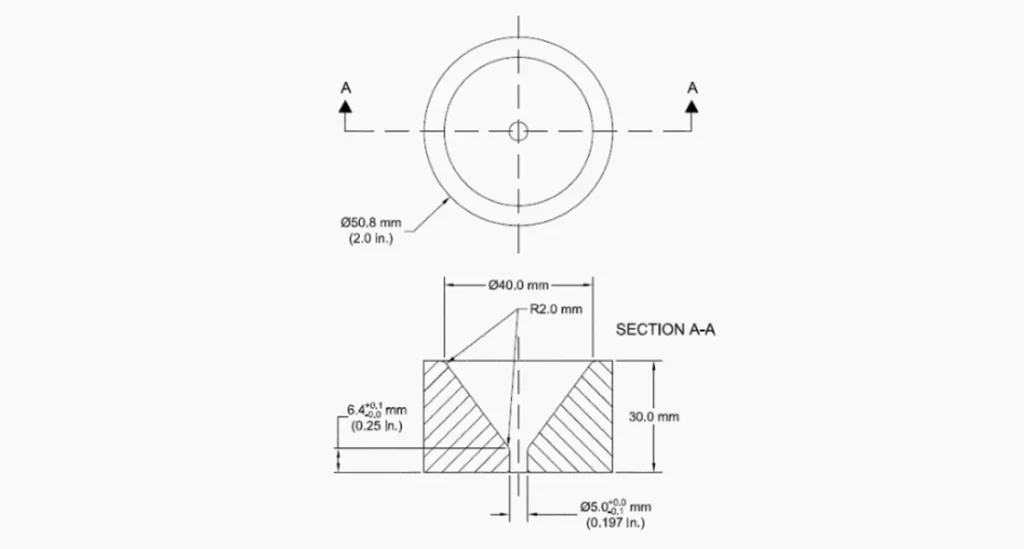
Figure 2 to Paragraph (c)(1) – Funnel Test Gauge. Material: Polytetrafluorethylene (PTFE)
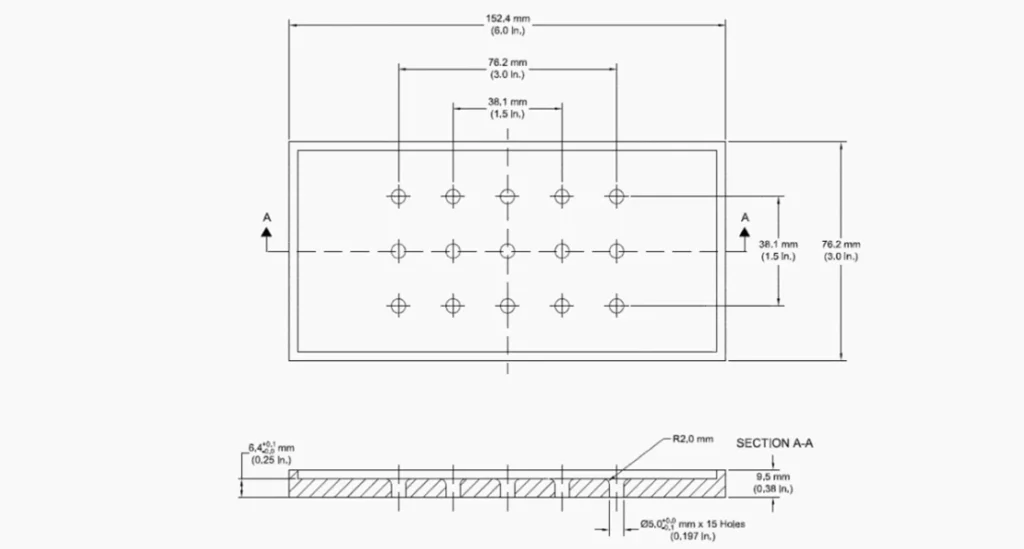
Figure 3 to Paragraph (c)(1)-Sieve Test Gauge. Material: Polytetrafluorethylene (PTFE)
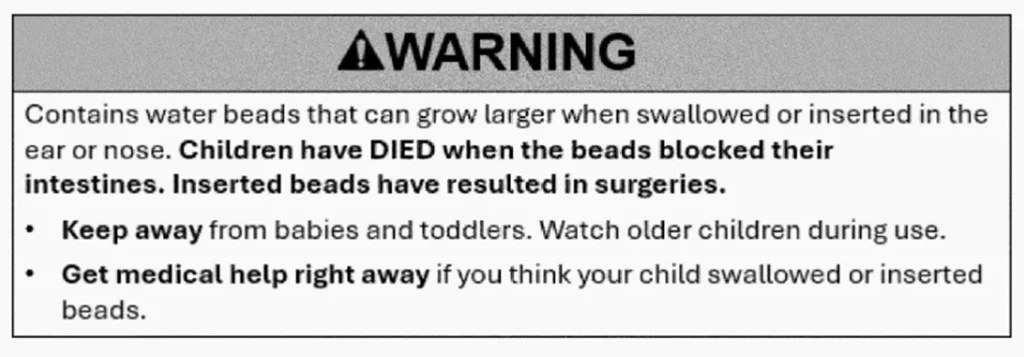
Figure 4 to Paragraph (d)(1)(i) – Warning for Water Bead Toys and Their Packaging
Acrylamide Limit Requirements
Water beads shall not have more than 325 µg acrylamide extractable from 100 small water beads (defined as <4 mm in all dimensions of the bead prior to hydration) or from one large water bead (defined as ≥4 mm in any dimension of the bead prior to hydration).
Warning Requirements
Water bead toys, packaging of water bead toys, and the container of water beads, if provided, must include the safety alert symbol, signal word, and word message as shown below. Further details about labeling format, type size, and placement can be found in Section (d) of the Final Rule.
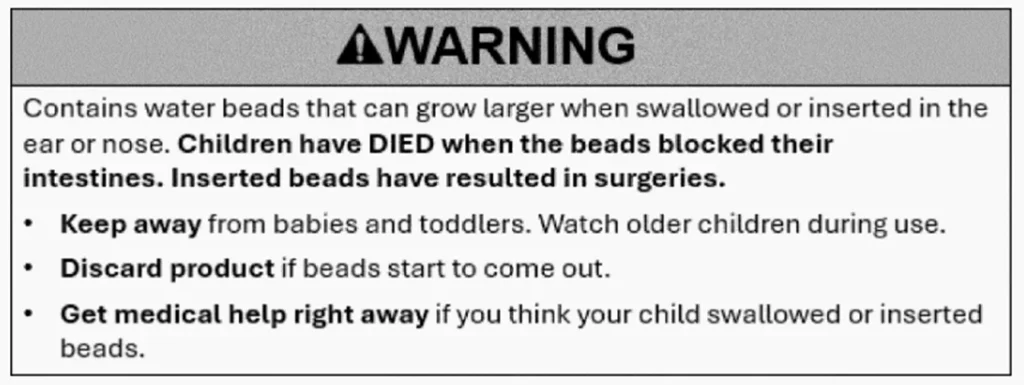
Figure 5 to Paragraph (d)(1)(ii) – Warning for Toys With Contained Water Beads and Their Packaging
Read the final rule 点击这里:
Codified at: 16 CFR §1250.4 (publish soon)
Effective Date: March 12, 2026
The key requirements are outlined in this article. For further details, please refer to the final rule.

